Palm geometry
Shape, size, aspect ratio, orientation, and boundary smoothing define the palm outline.
IROS 2026 · Pittsburgh
University of Illinois Urbana-Champaign
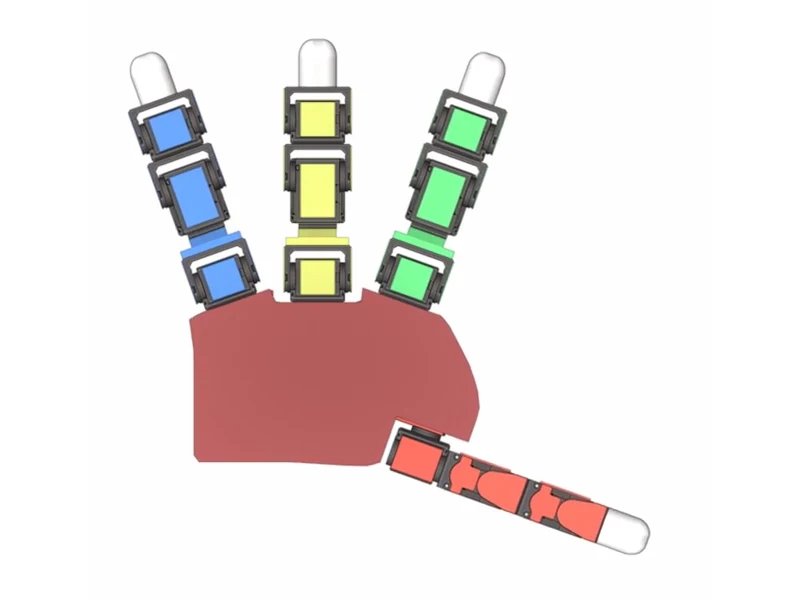
Bends every flexion joint toward its upper limit, within the exported joint ranges.
HandCDO searches a single parametric design space covering palm shape, finger layout, kinematics, fingertips, and contact-surface curvature. Each candidate is scored in simulation, and the best designs are printed, assembled, and tested on real tool use.
Hover or tap a stage.
Despite advances in dexterous hand manipulation, robotic hand design is still largely decoupled from task-driven evaluation and control, limiting systematic optimization. Existing robotic hand co-design approaches are often limited in scope, optimizing a small subset of design parameters. We introduce a comprehensive parametric framework for robotic hand generation that unifies palm structure, finger kinematics, fingertip geometry, and fine-scale surface curvatures within a single design space. Fine geometric features are introduced through parametric surface deformation kernels that directly influence contact interactions. We validate the framework on design optimization in grasp stability tasks in simulation and real-world dynamic scenarios. Our framework produces simulation- and fabrication-ready hand models, enabling rapid design iteration for dexterous hand co-design optimization and cross-embodiment policy training and control research.
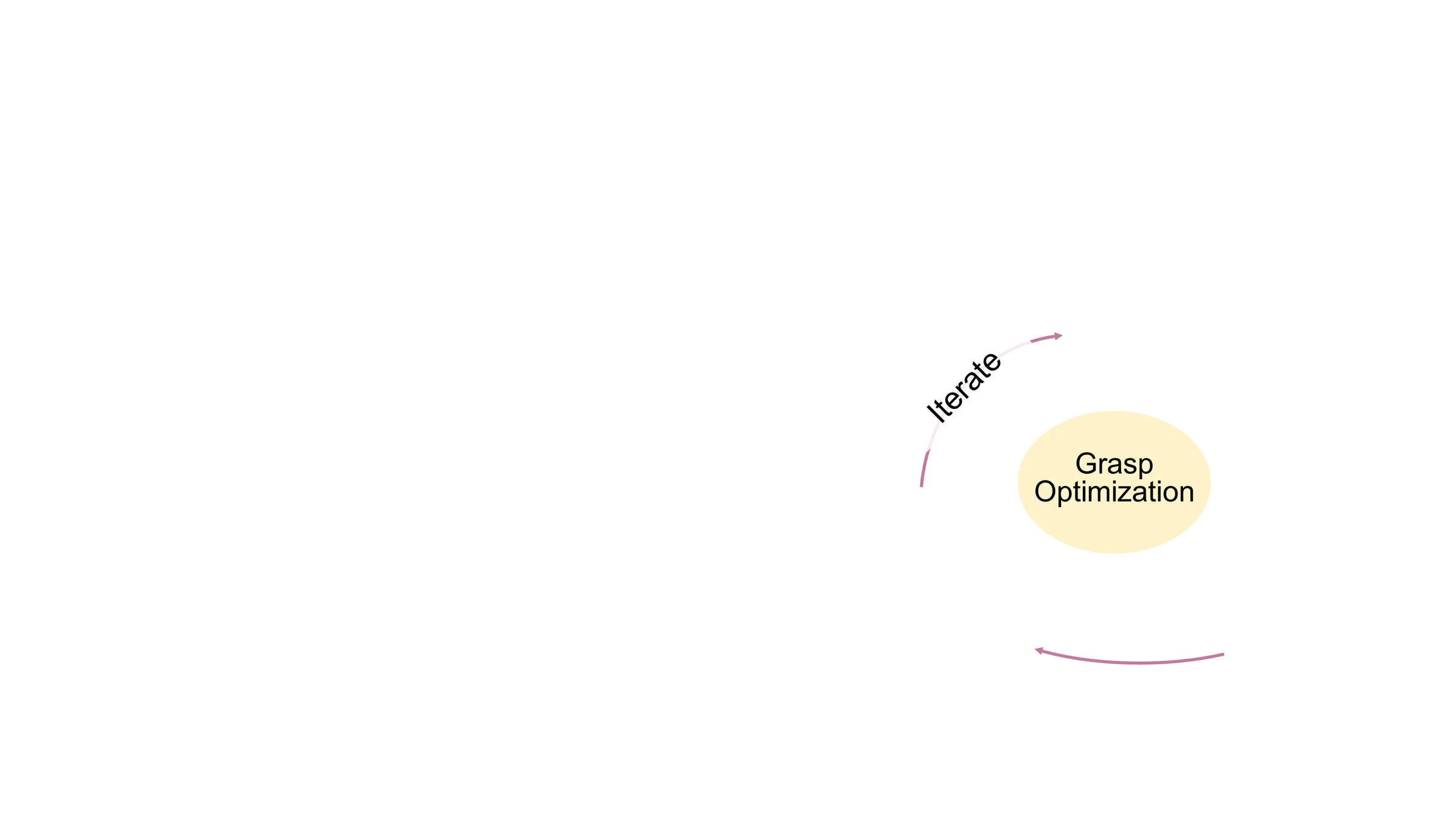
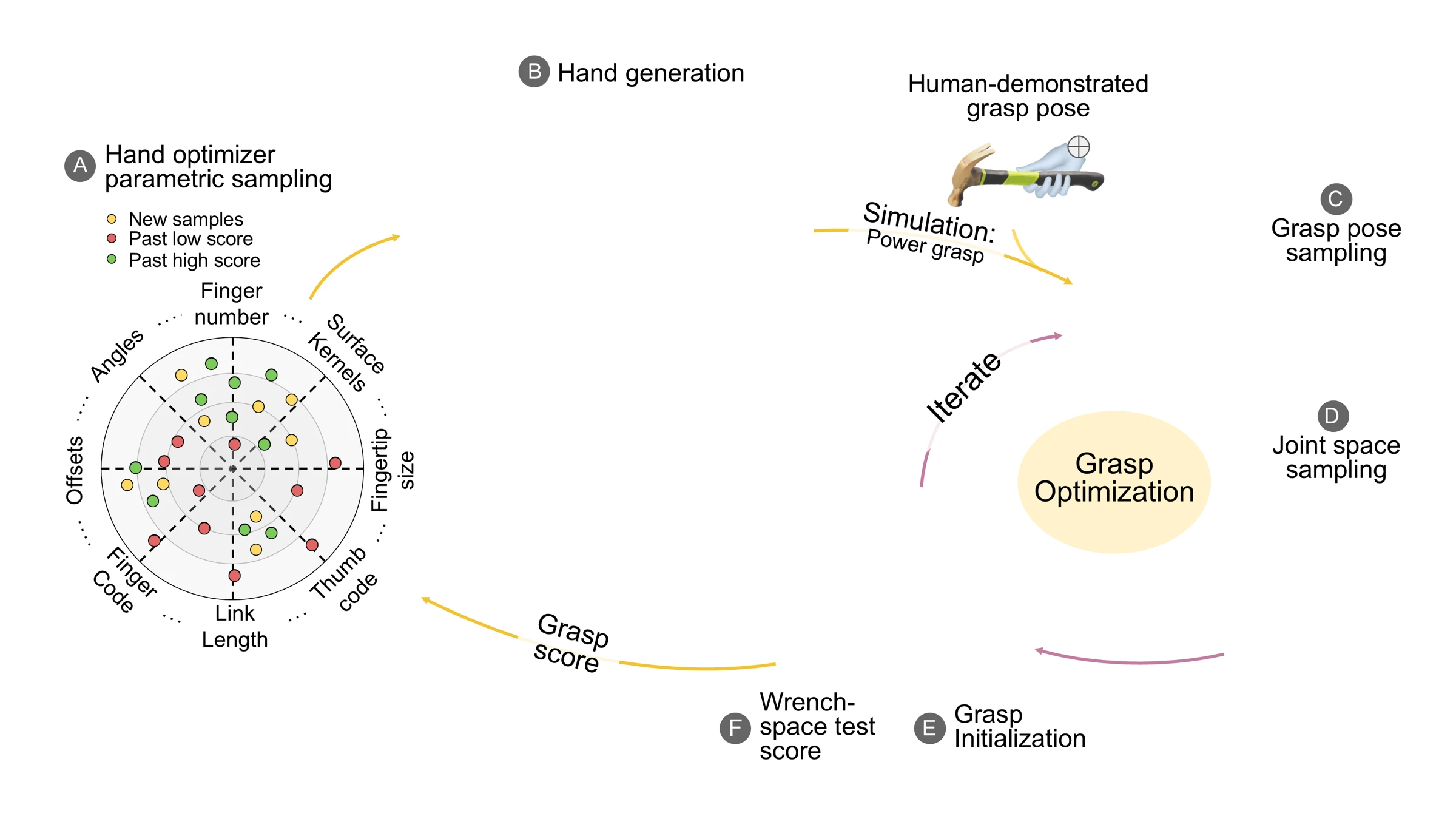
An outer optimizer proposes hands; an inner grasp search finds out how well each one can hold the task’s tool.
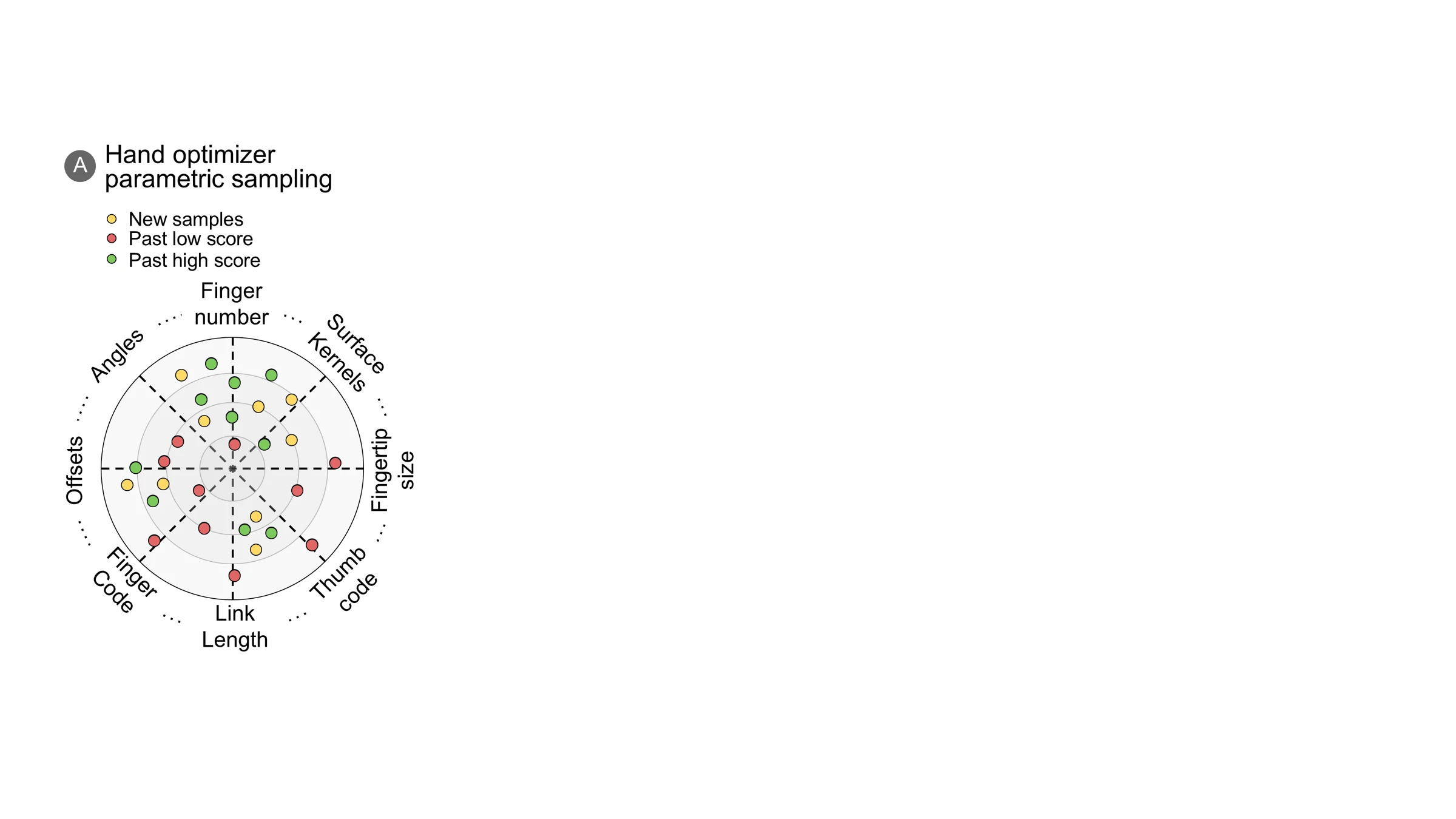
A tree-structured Parzen estimator (TPE) proposes the next hand: finger number, angles, offsets, link lengths, finger and thumb codes, fingertip size, and surface kernels. Past high and low scores shape where it samples next.
The parametric generator turns those numbers into meshes and a URDF, ready for simulation and for fabrication.
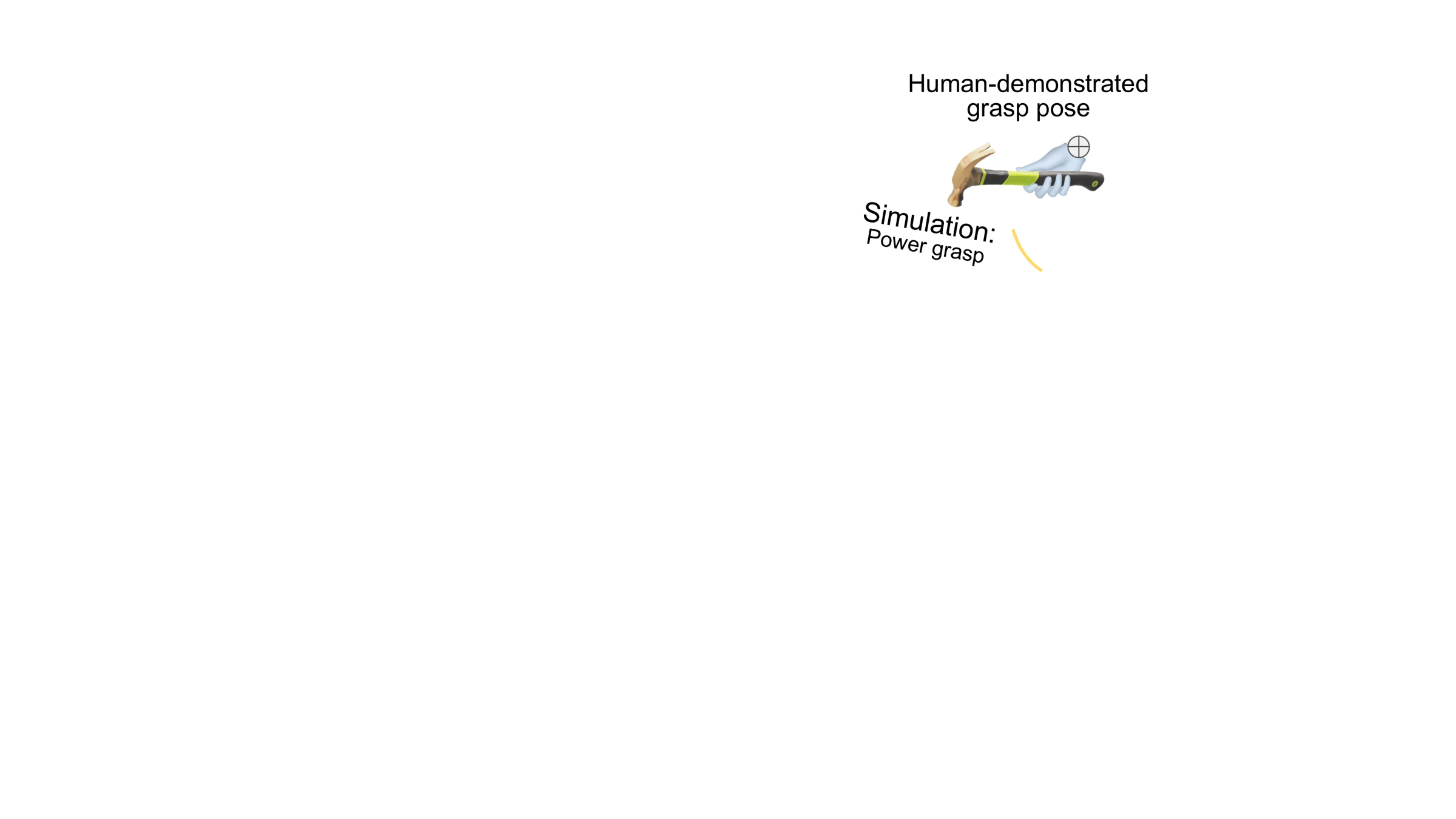
Each task starts from a demonstrated power grasp and tool trajectory, recorded with the object’s 6-D pose. These define what the hand must hold and how the tool will move.
An inner search samples where the hand meets the tool, around the demonstrated grasp.
For each pose, joint configurations are sampled and the grasp is initialized in simulation.
The grasp is tested against disturbances along and about each axis. That score returns to the outer optimizer, which proposes the next hand.
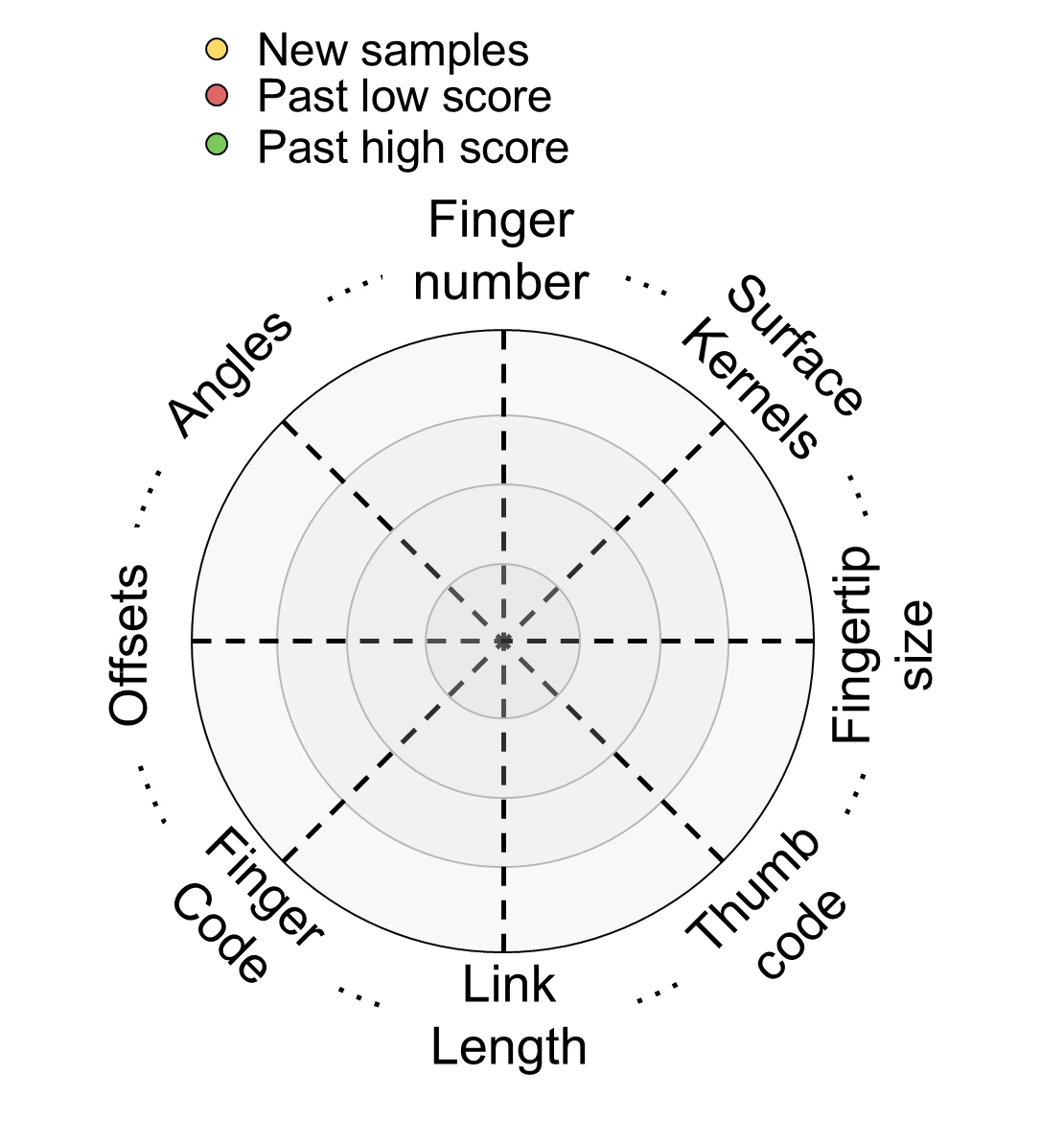
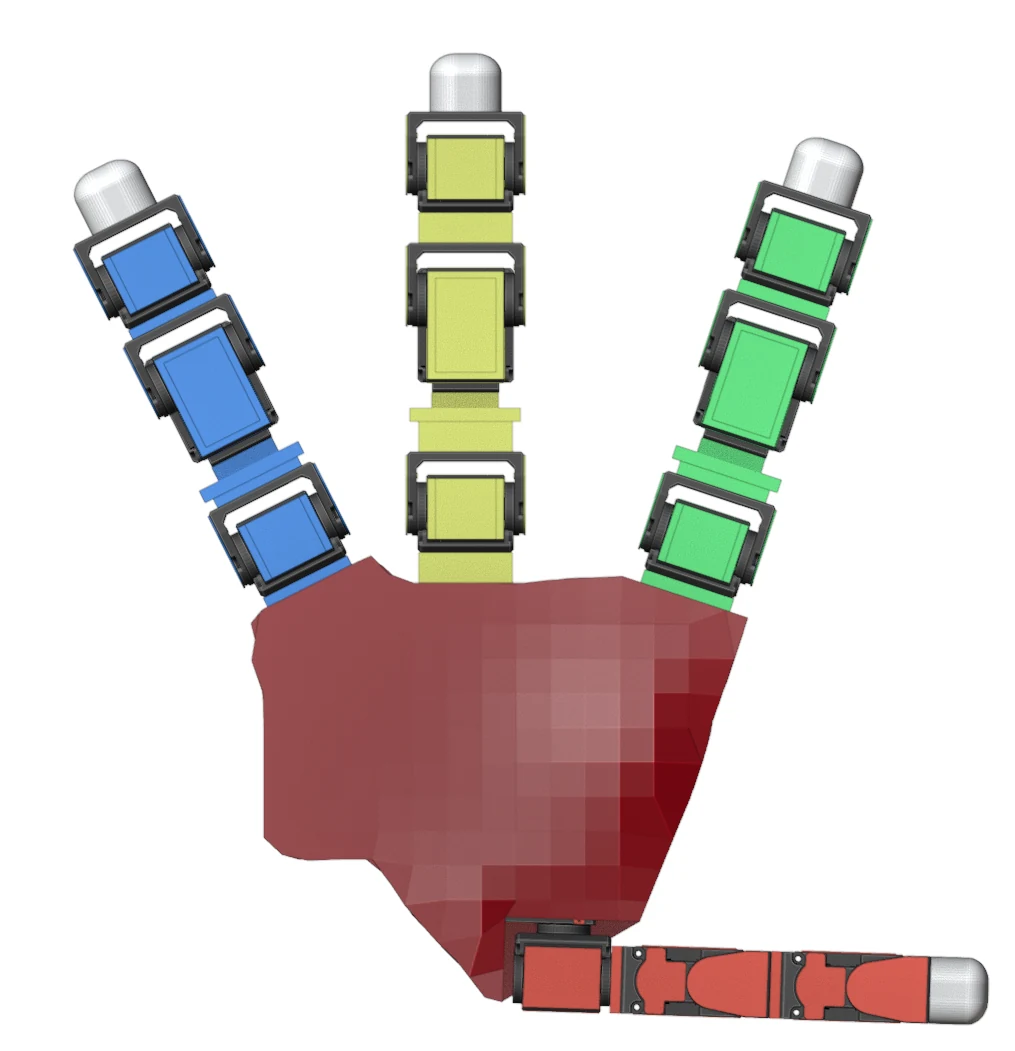
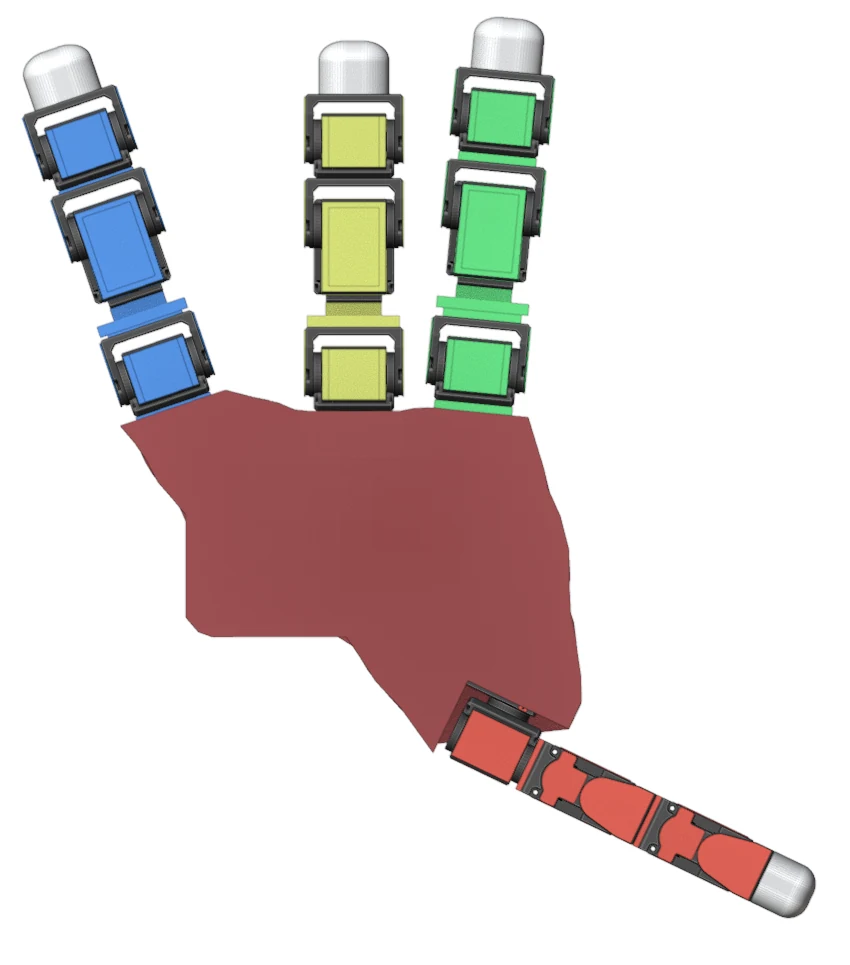
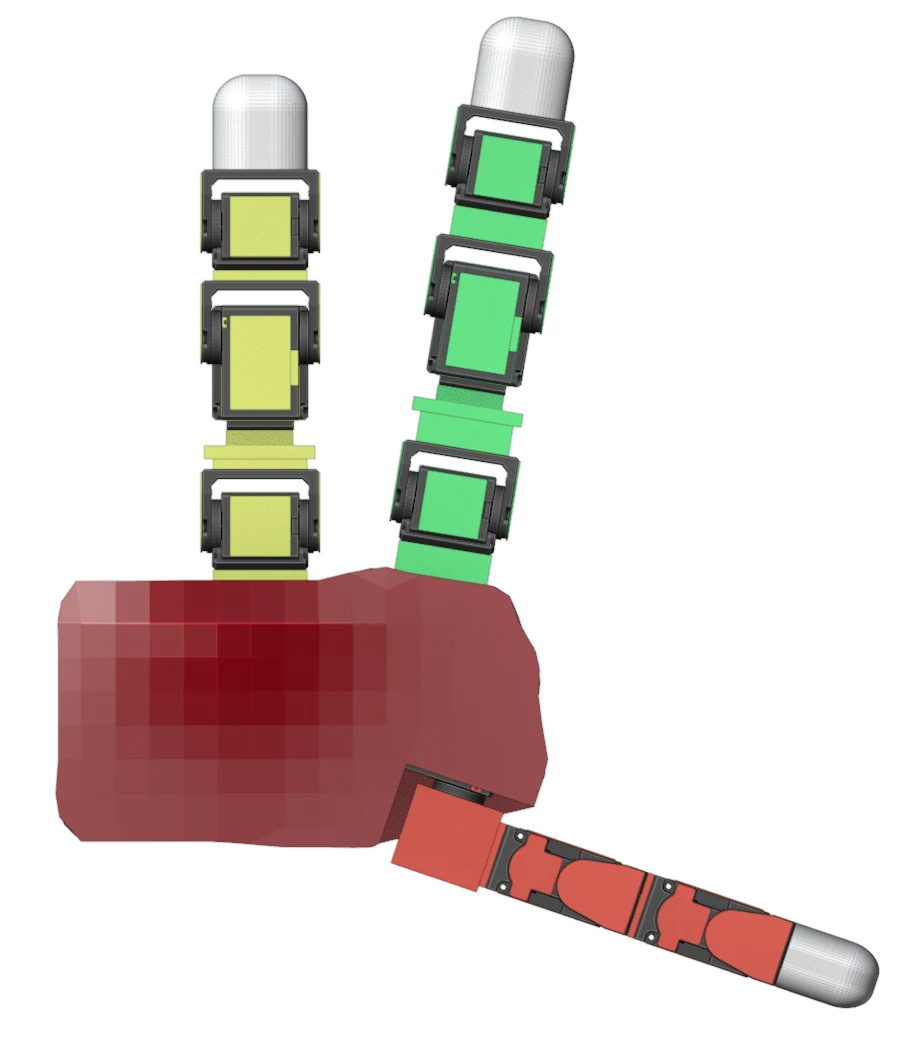
Each clip changes one family of parameters while the rest of the hand stays fixed. Rendered with the current generator.
Shape, size, aspect ratio, orientation, and boundary smoothing define the palm outline.
Fingers and the thumb can sit anywhere along the palm outline, and where each one sits is itself a design parameter, as is the number of fingers.
Each finger moves independently along its attachment normal.
Outer fingers rotate outward and the thumb rotates, changing the hand’s spread.
Each link of each finger and the thumb can be extended on its own.
Digits cycle through rotational joint configurations as joints are added and removed.
Deformation kernels vary height, width, aspect, position, and orientation on palm and finger pads.
Each fingertip scales independently in width, depth, and length.
Clips use the current generation_v2 generator. The paper’s optimization and experiments use iros_paper_codebase; both are in the repository.
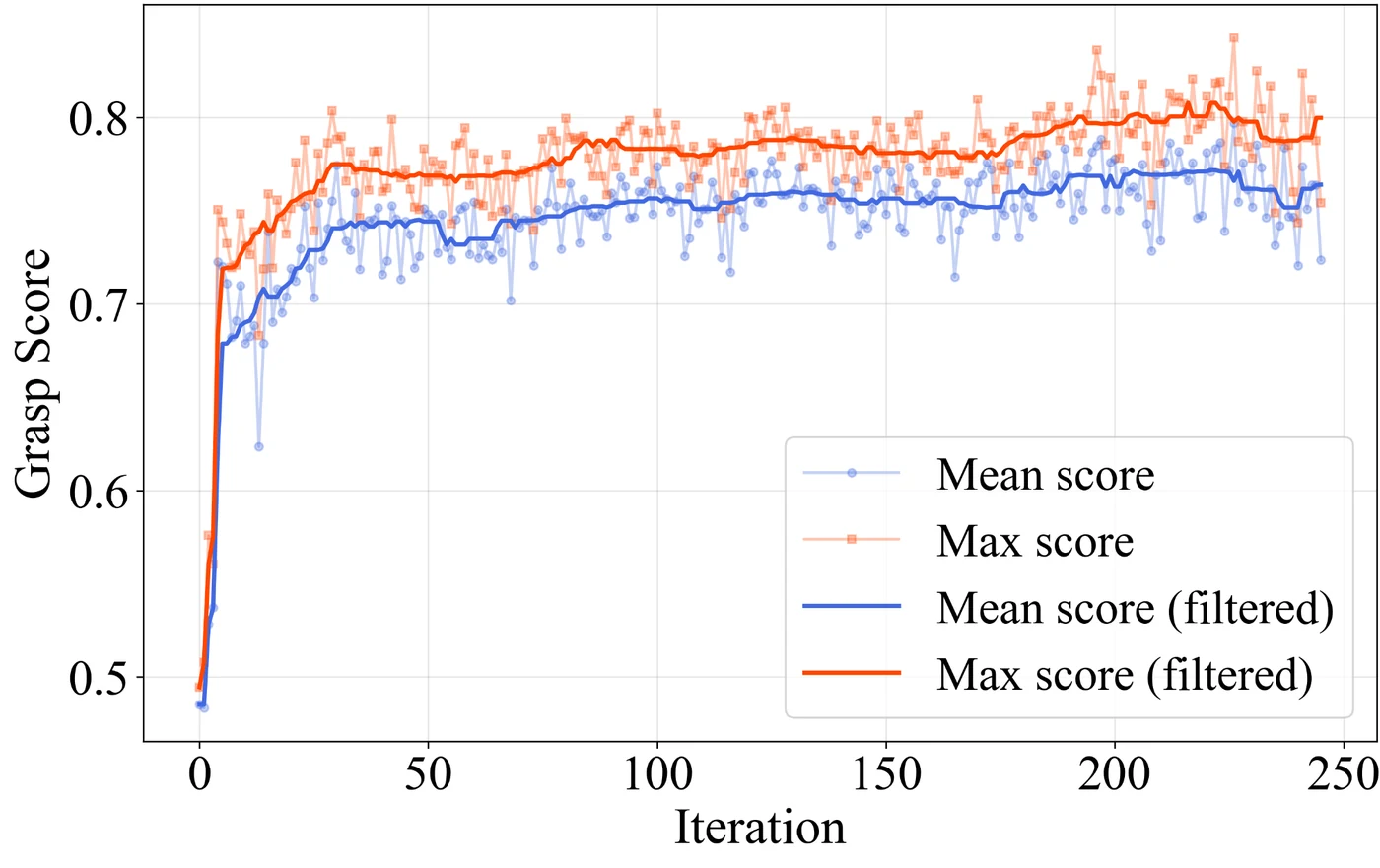
The reported run searches 28 selected design parameters, scoring 8 sampled hands per iteration, and converges after roughly 200 iterations.
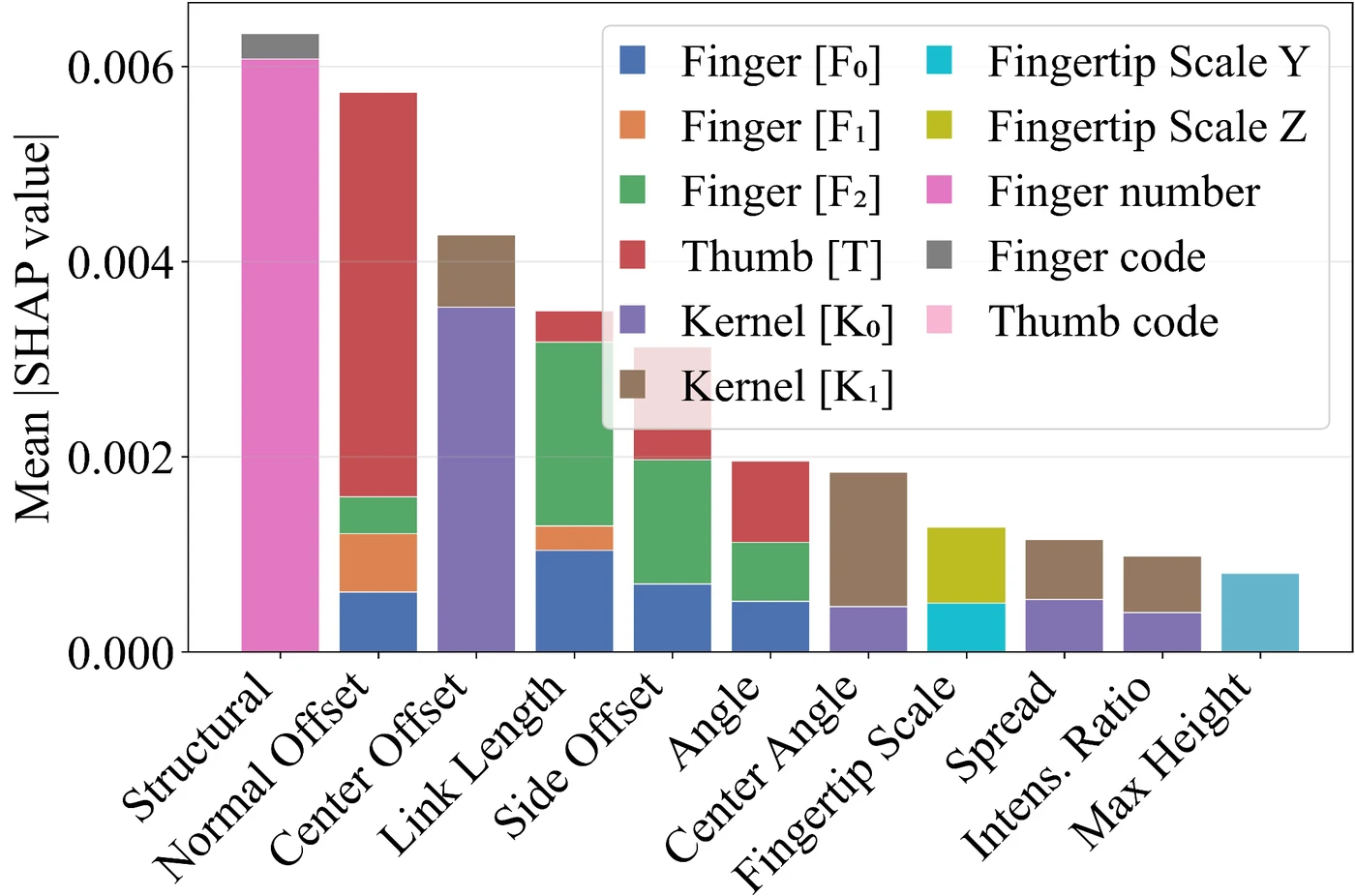
Each row is one design parameter, ordered by its impact on the simulated grasp score. Hover, tab to, or tap a row to see what it means, the range the optimizer searched, and a generated hand sweeping that range.
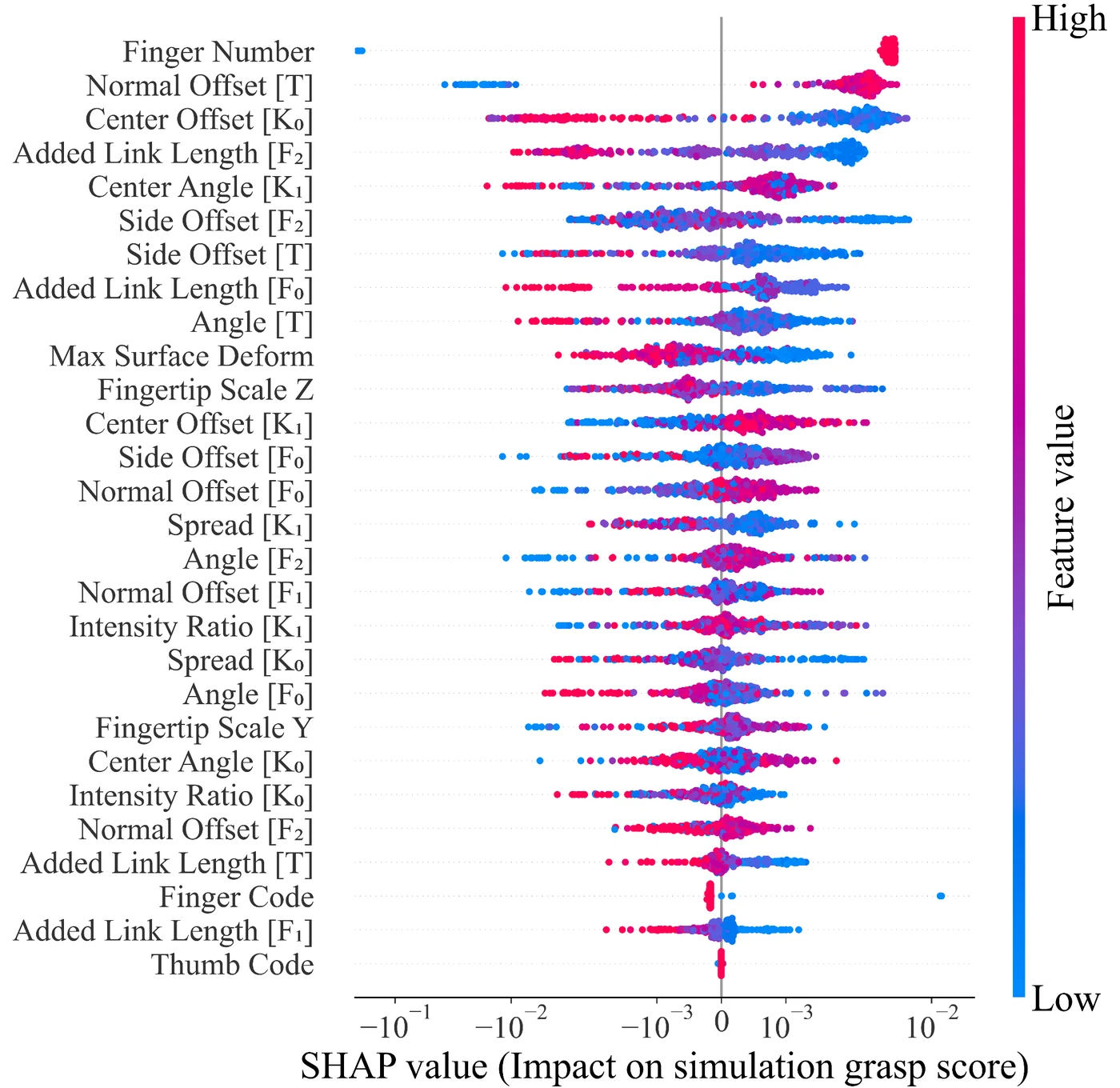
F₀ right finger (green, beside the thumb), F₁ middle (yellow), F₂ left (blue), T thumb; K₀ and K₁ are the two palm surface kernels.
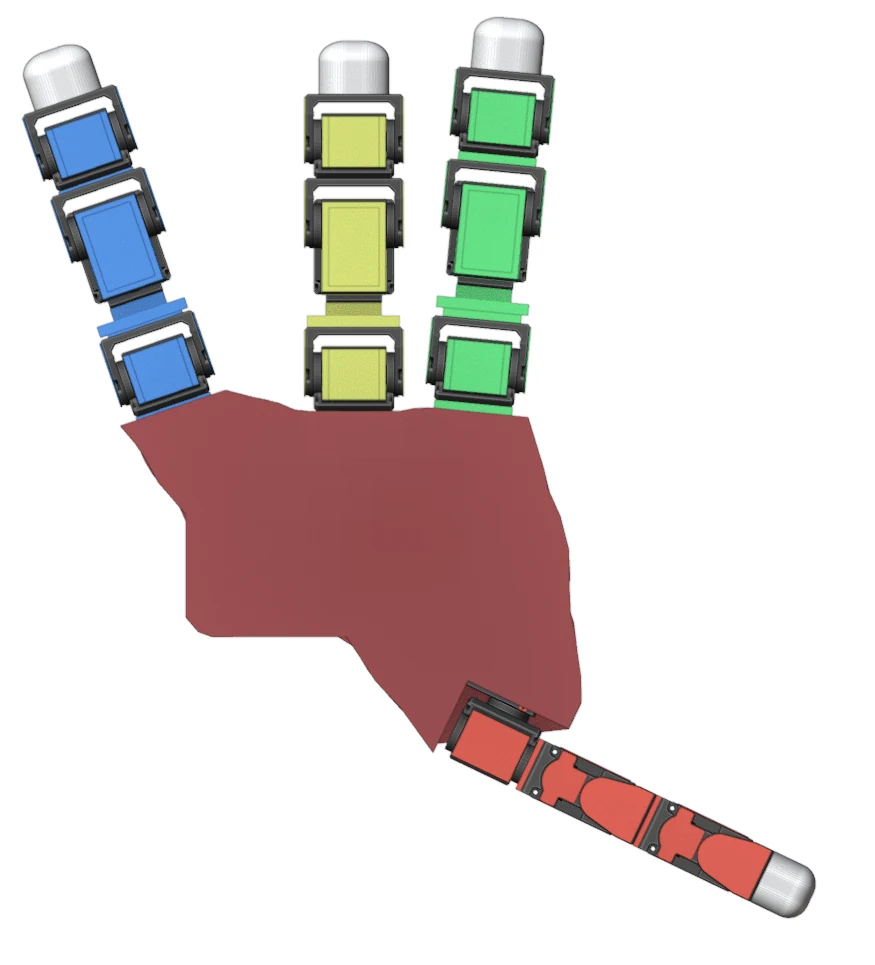
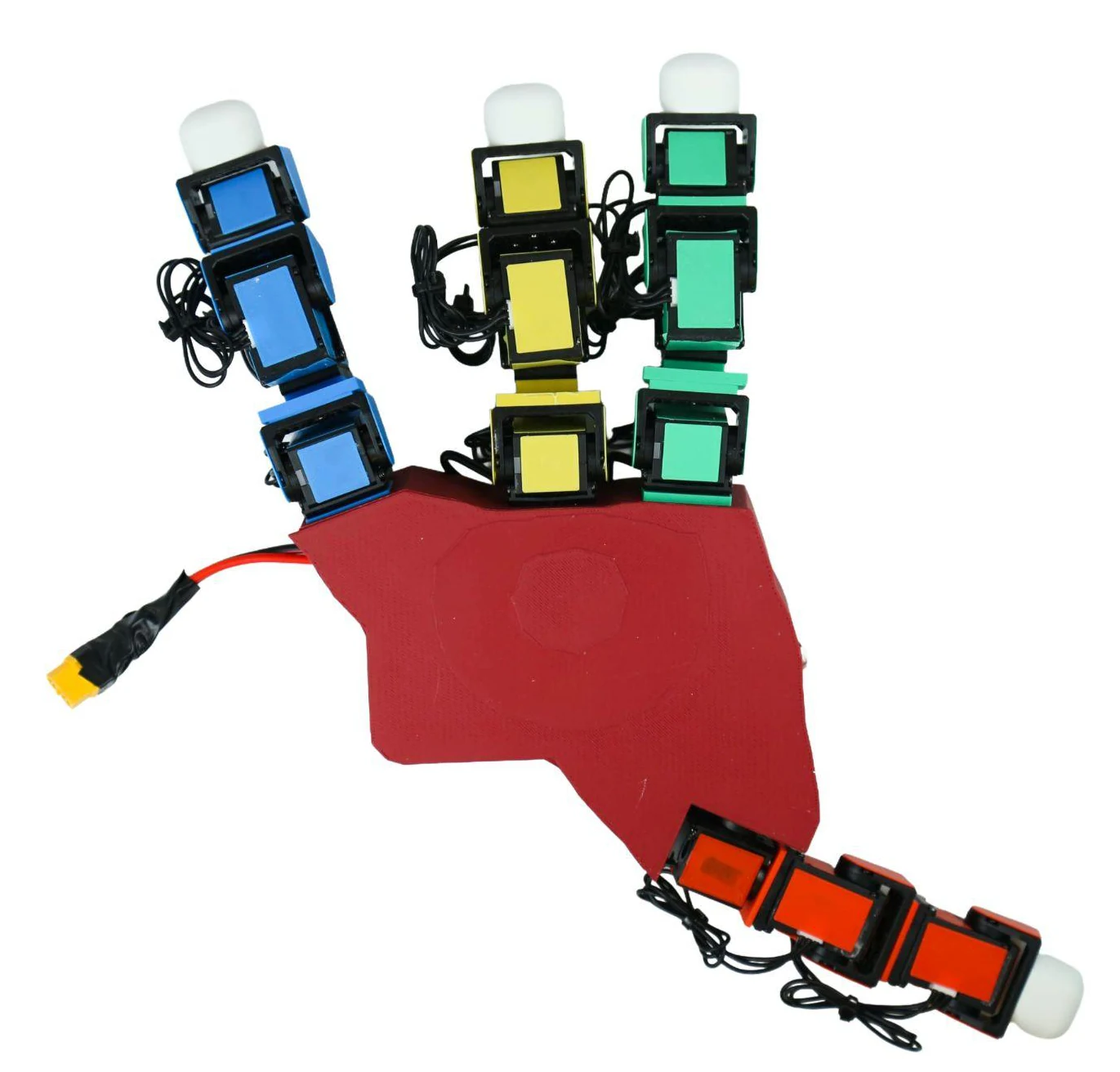
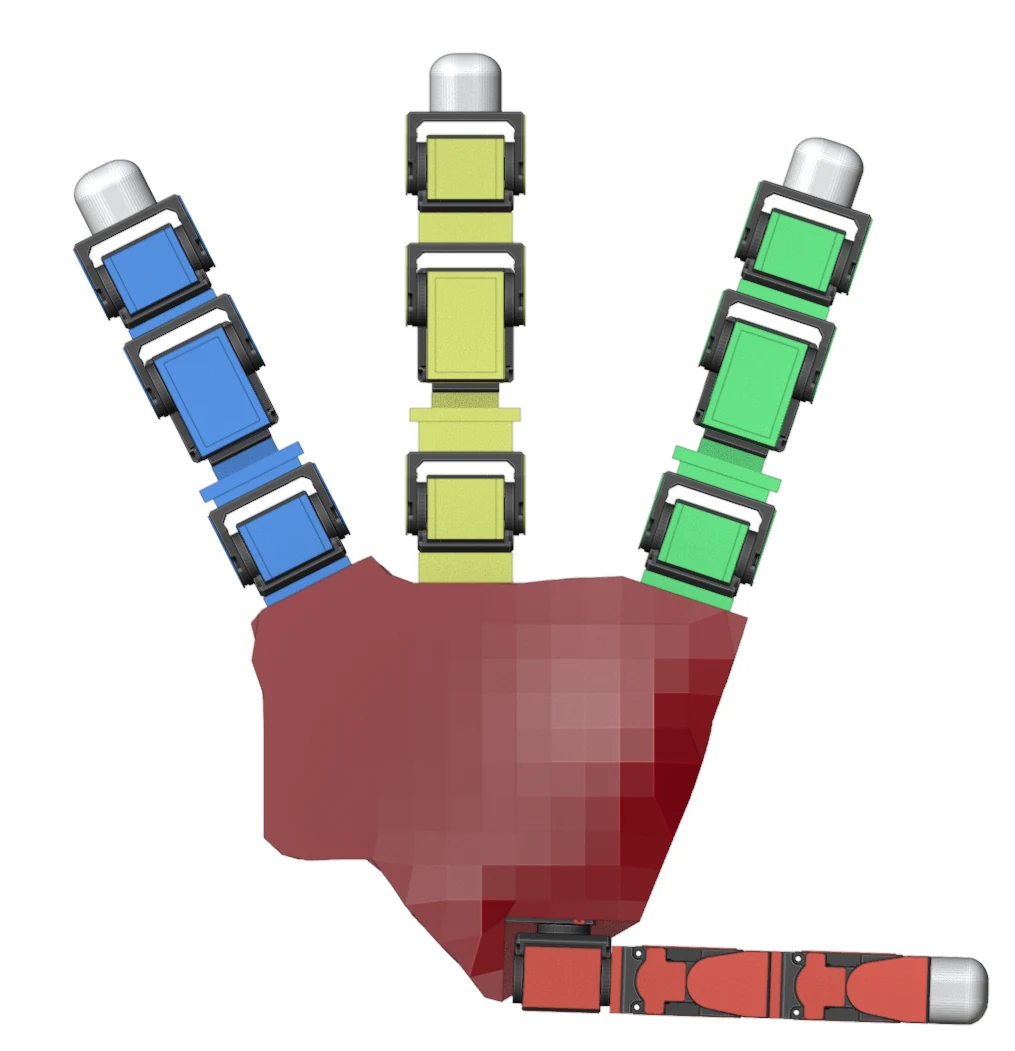
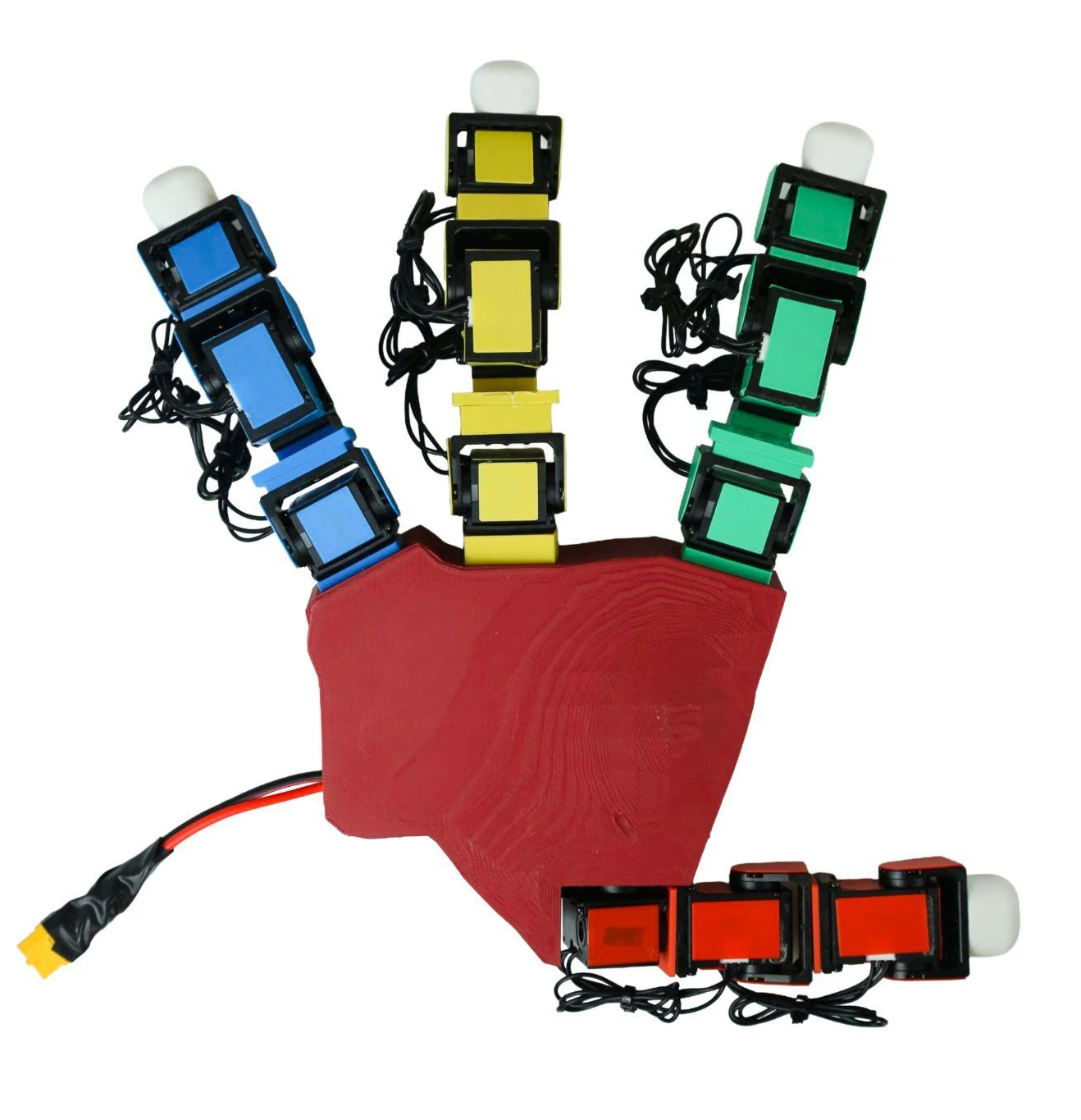
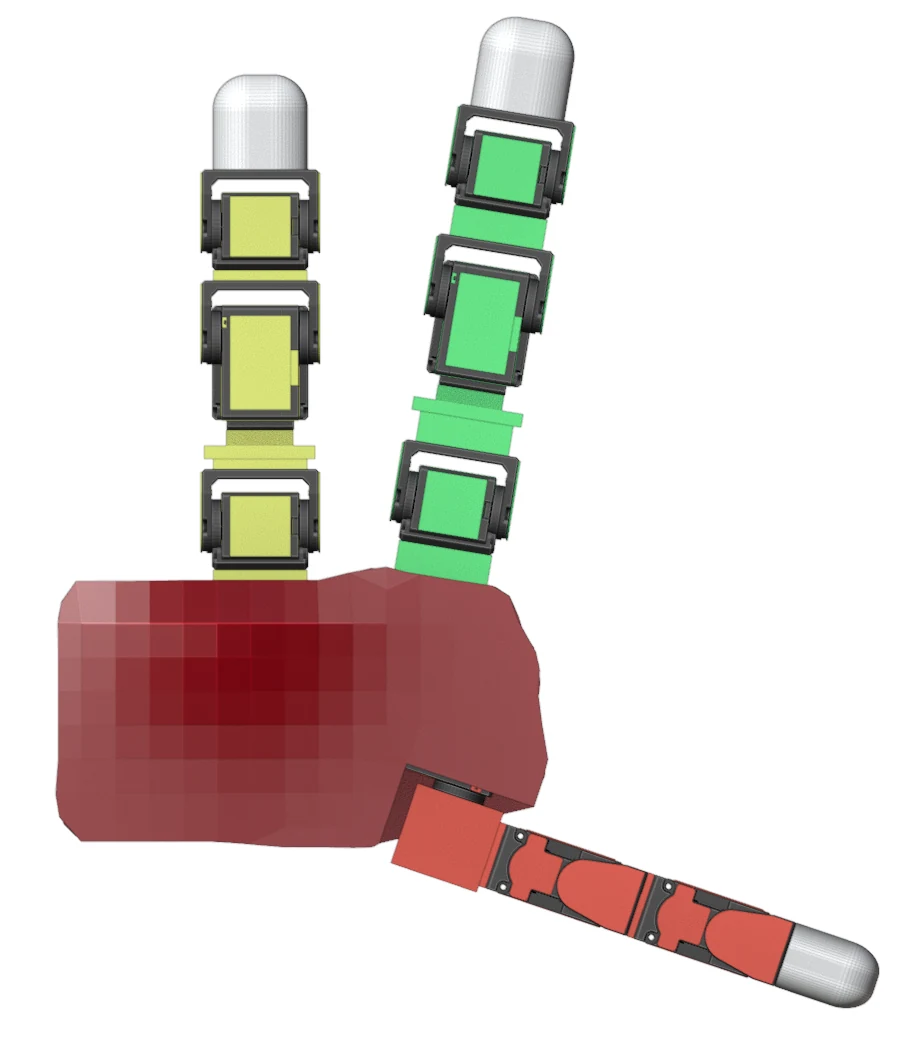
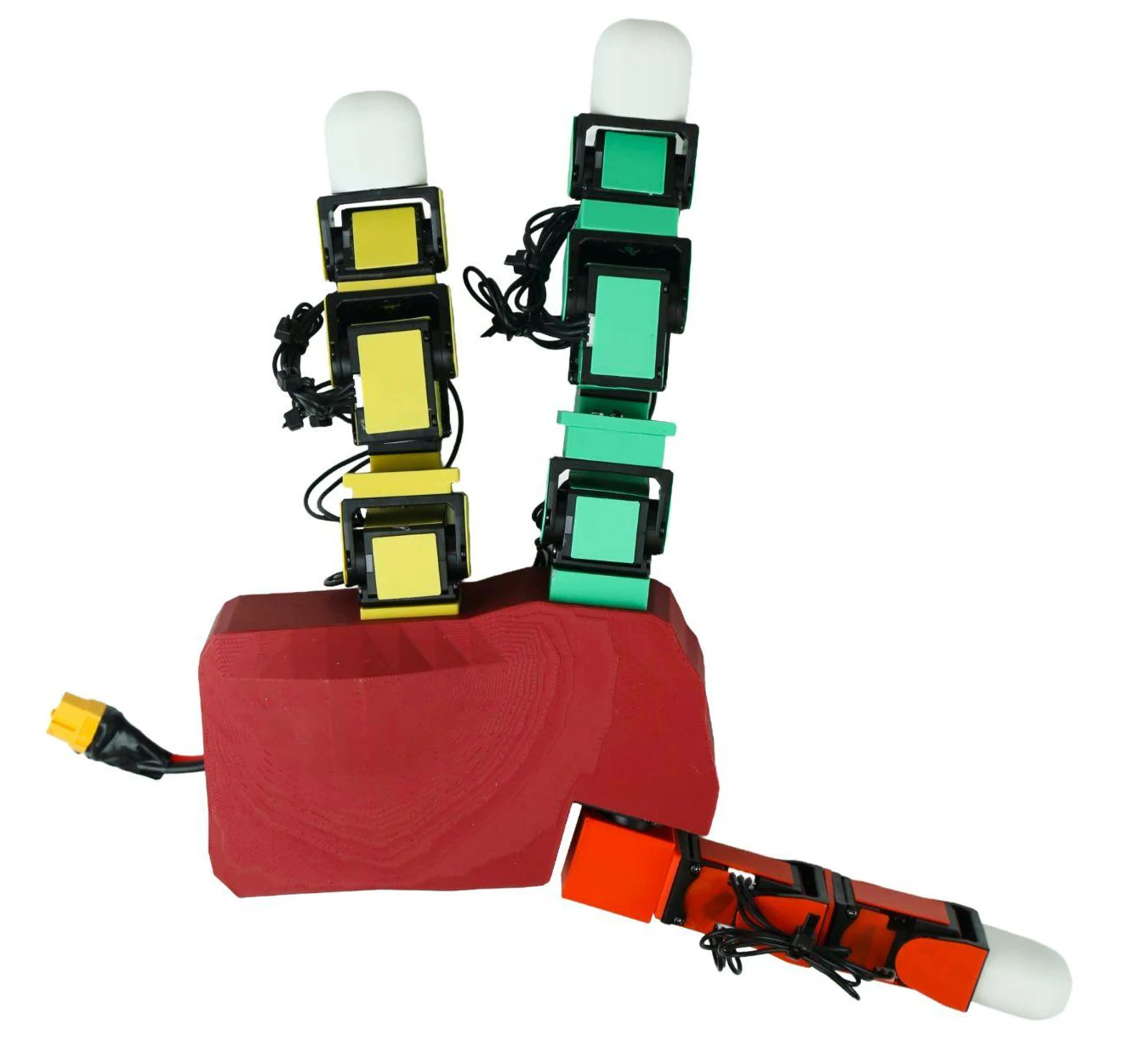
Left of each pair: simulation model. Right: fabricated hand. Score is grasp stability in simulation.
Hands mounted on a UR5e stir, hammer and cut. OptiTrack measures in-hand rotational slip of the tool; dashed lines are each hand’s mean. The plots draw in step with the cameras. Hover or tap a hand to highlight its curve.
Relative in-hand rotational slip
Time (s)
Relative in-hand rotational slip
Time (s)
Relative in-hand rotational slip
Time (s)
@misc{mirzaee2026handcdo,
  title  = {Function-based Parametric Co-Design Optimization
            of Dexterous Hands},
  author = {Mirzaee, Mohammad Amin and Gupta, Harsh and Yuan, Wenzhen},
  year   = {2026},
  eprint = {2604.27557},
  archivePrefix = {arXiv},
  url    = {https://arxiv.org/abs/2604.27557}
}